310
18 days ago
Brazil's soy giants clear way for deforestation
Summary
For almost two decades, Brazil's largest soy producers guaranteed their products did not come from land cleared in the Amazon rainforest. Now, all bets are off.
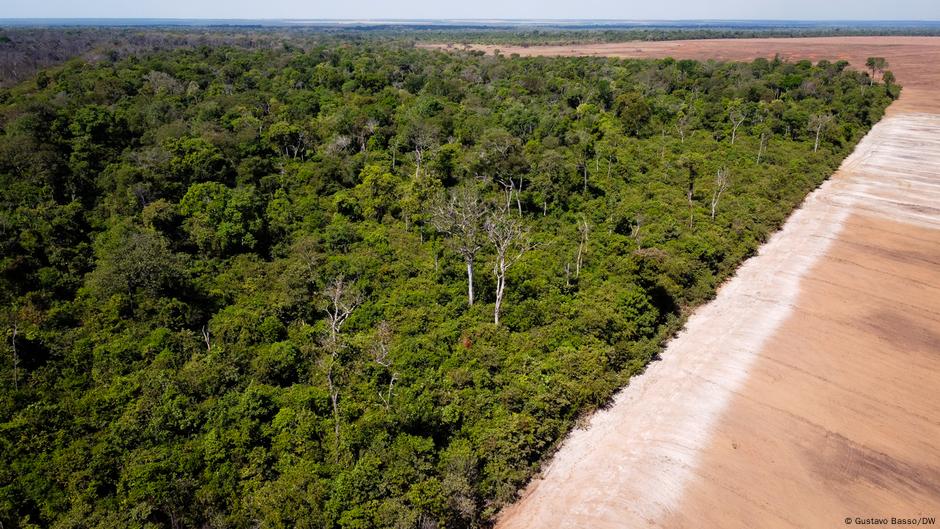
A moratorium that has protected vital rainforest since 2009 is on shaky ground as several players from Brazil's soy industry say they are pulling out.
Specifically, the Brazilian industry association ABIOVE, whose members include global companies such as Cofco International, Bunge, Amaggi and JBS, have said they will no longer refrain from growing soy on deforested land. Environmentalists fear this could fuel a new wave of Amazon logging.
A joint statement from several Brazilian environmental organizations involved in monitoring the moratorium said the companies involved were "abandoning clear and transparent rules for short-term financial gain — reopening the door to forest destruction."
A preliminary study by the Brazilian Amazon Environmental Research Institute (IPAM) indicates that ending the moratorium could increase deforestation in the Amazon by up to 30% by 2045.
ABIOVE said in a statement to DW that it would continue to adhere to the Brazilian Forest Code as an ecological and social standard.
The withdrawal from the moratorium also serves to secure the export of Brazilian soy and its by-products in the long term.
Experts have long considered the agreement an effective shield against deforestation in the Amazon, which is one of the most biodiverse regions on Earth. Acting as a carbon sink, it also plays a critically important role in regulating global temperatures.
Under the voluntary moratorium, which was introduced in 2006 as a result of pressure from environmental groups and international buyers, major soy traders agreed to ban the purchase of soy grown on land cleared in the Amazon.
According to IPAM, deforestation rates in monitored areas fell by around 70% as a result.
Overall, however, forest clearing for soy cultivation has increased significantly. Since 2008, soy-growing areas in the Brazilian Amazon have more than tripled — by 7.28 million hectares. The moratorium could not stop this trend. According to WWF, 80% of the world's soy production is used as animal feed.
Eduardo Vanin, who analyzes Brazil's soy market at the financial services platform Marex, expects soy acreage in the Amazon state of Mato Grosso alone to expand by 150,000 hectares. Though he is not predicting a dramatic spike in deforestation, he says "ending the moratorium will make it easier to clear forest or open up new land."
In the global soy market, a power shift has unfolded over recent decades — and is now accelerating. With a 40% market share, Brazil is the world's largest producer. The United States ranks second. But it wasn't always this way.
In the early 2000s, most protein-rich soybeans came from the US, and only about one-third from Brazil.
This is connected to the world's largest buyer of soy — China, which now imports 70% of its supply from Brazil versus just 21% from the US.
To view this video please enable JavaScript, and consider upgrading to a web browser that supports HTML5 video
According to the American Soybean Association, Chinese buyers began reducing reliance on the US in 2012 after drought destroyed large parts of the nation's harvests. Brazil stepped in to meet demand.
That trend picked up pace during the 2018 US–China trade conflict and again in 2025. Experts predict that the US will continue losing market share in the coming months.
Joana Colussi of Purdue University's Center for Commercial Agriculture says Brazil has an advantage over America because it has far more available land, reducing costs per hectare.
Since the pandemic and later Russia's war in Ukraine, global demand for commodities has surged — benefiting Brazil.
"Many factors explain this expansion: land availability, the international market, weather, and Brazil's expertise in soy production," she said.
Vanin adds that "by dropping the moratorium, Brazil's dependency on China will deepen."
Brazil is also the EU's largest supplier of soybeans, which it exports tariff-free. And recent signals from Europe suggest less pressure on Brazil to protect the Amazon.
Late last year, the EU postponed a regulation intended to ban imports linked to deforestation. It also weakened its directive on corporate sustainability due diligence.
Yet Vanin says Europe's standards are still high enough to disadvantage exporters unable to prove their products are deforestation-free.
In response to ABIOVE's announcement on withdrawing from the moratorium, 14 major European buyers — including leading supermarket chains Lidl and Aldi — have already said they will stop purchasing soy products unless supply chains remain fully traceable.
This article was originally published in German.
A moratorium that has protected vital rainforest since 2009 is on shaky ground as several players from Brazil's soy industry say they are pulling out.
Specifically, the Brazilian industry association ABIOVE, whose members include global companies such as Cofco International, Bunge, Amaggi and JBS, have said they will no longer refrain from growing soy on deforested land. Environmentalists fear this could fuel a new wave of Amazon logging.
A joint statement from several Brazilian environmental organizations involved in monitoring the moratorium said the companies involved were "abandoning clear and transparent rules for short-term financial gain — reopening the door to forest destruction."
A preliminary study by the Brazilian Amazon Environmental Research Institute (IPAM) indicates that ending the moratorium could increase deforestation in the Amazon by up to 30% by 2045.
ABIOVE said in a statement to DW that it would continue to adhere to the Brazilian Forest Code as an ecological and social standard.
The withdrawal from the moratorium also serves to secure the export of Brazilian soy and its by-products in the long term.
Experts have long considered the agreement an effective shield against deforestation in the Amazon, which is one of the most biodiverse regions on Earth. Acting as a carbon sink, it also plays a critically important role in regulating global temperatures.
Under the voluntary moratorium, which was introduced in 2006 as a result of pressure from environmental groups and international buyers, major soy traders agreed to ban the purchase of soy grown on land cleared in the Amazon.
According to IPAM, deforestation rates in monitored areas fell by around 70% as a result.
Overall, however, forest clearing for soy cultivation has increased significantly. Since 2008, soy-growing areas in the Brazilian Amazon have more than tripled — by 7.28 million hectares. The moratorium could not stop this trend. According to WWF, 80% of the world's soy production is used as animal feed.
Eduardo Vanin, who analyzes Brazil's soy market at the financial services platform Marex, expects soy acreage in the Amazon state of Mato Grosso alone to expand by 150,000 hectares. Though he is not predicting a dramatic spike in deforestation, he says "ending the moratorium will make it easier to clear forest or open up new land."
In the global soy market, a power shift has unfolded over recent decades — and is now accelerating. With a 40% market share, Brazil is the world's largest producer. The United States ranks second. But it wasn't always this way.
In the early 2000s, most protein-rich soybeans came from the US, and only about one-third from Brazil.
This is connected to the world's largest buyer of soy — China, which now imports 70% of its supply from Brazil versus just 21% from the US.
To view this video please enable JavaScript, and consider upgrading to a web browser that supports HTML5 video
According to the American Soybean Association, Chinese buyers began reducing reliance on the US in 2012 after drought destroyed large parts of the nation's harvests. Brazil stepped in to meet demand.
That trend picked up pace during the 2018 US–China trade conflict and again in 2025. Experts predict that the US will continue losing market share in the coming months.
Joana Colussi of Purdue University's Center for Commercial Agriculture says Brazil has an advantage over America because it has far more available land, reducing costs per hectare.
Since the pandemic and later Russia's war in Ukraine, global demand for commodities has surged — benefiting Brazil.
"Many factors explain this expansion: land availability, the international market, weather, and Brazil's expertise in soy production," she said.
Vanin adds that "by dropping the moratorium, Brazil's dependency on China will deepen."
Brazil is also the EU's largest supplier of soybeans, which it exports tariff-free. And recent signals from Europe suggest less pressure on Brazil to protect the Amazon.
Late last year, the EU postponed a regulation intended to ban imports linked to deforestation. It also weakened its directive on corporate sustainability due diligence.
Yet Vanin says Europe's standards are still high enough to disadvantage exporters unable to prove their products are deforestation-free.
In response to ABIOVE's announcement on withdrawing from the moratorium, 14 major European buyers — including leading supermarket chains Lidl and Aldi — have already said they will stop purchasing soy products unless supply chains remain fully traceable.
This article was originally published in German.
AI Description
The article discusses the potential end of a moratorium that has protected the Amazon rainforest from deforestation for soy production. Brazil's largest soy producers are reconsidering their commitment to this agreement.