210
18 days ago
Germany news: Strikes hit public transport across country
Summary
German commuters are facing transport misery with local bus and tram strikes across the country. However, there's been good news for travelers who take trains with national rail operator Deutsche Bahn. DW has the latest.
Here are the headlines, reports and analyses from across Germany on Friday, February 27:
Long rail strikes by Germany’s train drivers' union GDL have been avoided after national rail operator Deutsche Bahn and the union reached a new collective bargaining agreement overnight.
Spokespeople for both sides confirmed early Friday that a deal had been struck, with full details set to be presented later in Berlin.
The GDL had submitted a 40-point list of demands, including pay increases of up to 8% for its members.
The proposals included:
There were no immediate details of what compromise was made.
Had the latest round of talks failed, train drivers would have been free to go on strike from March. That could have led to widespread travel chaos for passengers already weary of the rail service's poor reliability.
To view this video please enable JavaScript, and consider upgrading to a web browser that supports HTML5 video
In collective bargaining negotiations — conducted separately in all 16 federal states, mostly with municipal employers' associations — Verdi is primarily demanding significantly improved working conditions.
These include shorter weekly and shift working hours, longer rest periods, and higher bonuses for night and weekend work. In Bavaria, Brandenburg, Saarland, Thuringia, and at Hamburg's Hochbahn, higher wages and salaries are also under negotiation.
According to Verdi, talks have recently made little progress. Employers have likewise complained about a lack of movement in negotiations. Berlin's BVG, Germany's largest local transport company, has criticized Verdi for not clearly stating which demands are its top priorities.
It's unclear when agreements between employers and the union will be reached. Negotiations are progressing very differently from region to region, but none appeared close to a breakthrough recently.
Public transport buses and trains have been facing major disruptions across almost all German federal states since the early morning hours due to warning strikes.
"The strike has begun," the chief negotiator of the trade union Verdi, Serat Canyurt, confirmed.
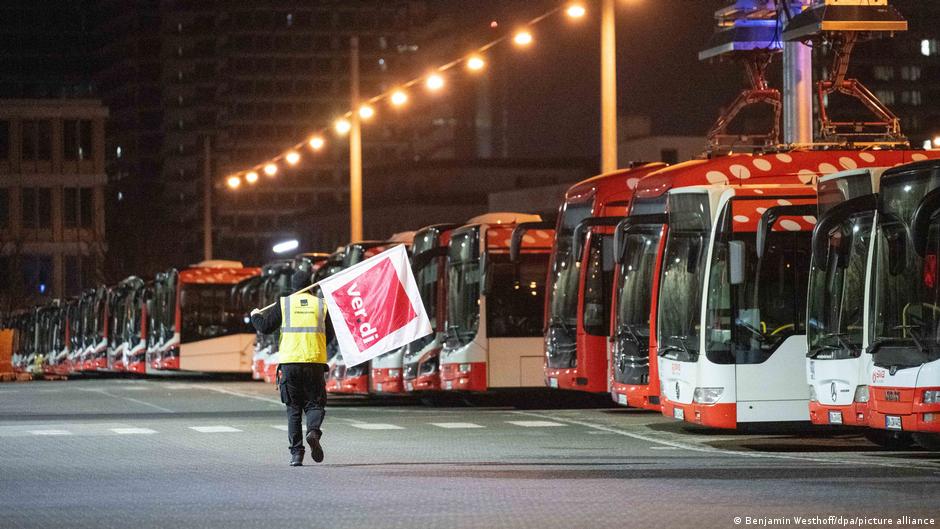
Buses, trams, and subway trains are expected to remain in depots for 48 hours, with services scheduled to resume only at the start of operations on Sunday morning.
In most regions, very few buses, trams, or subway trains are expected to operate. The strikes that began in the early hours of Friday could, depending on the area, continue into the early hours of Sunday.
However, in Lower Saxony, an obligation not to strike remains in force until the end of March, meaning industrial action in local public transport is not permitted there until then.
Whether new warning strikes will take place in the southwestern state of Baden-Württemberg remains unclear.
To view this video please enable JavaScript, and consider upgrading to a web browser that supports HTML5 video
Guten Tag from DW's newsroom in Bonn, where — after a pretty chilly and enduring winter— there's a spring in our step as temperatures are expected to reach a balmy 19 degrees Celsius.
That said, it's a miserable day for commuters as local bus and rail services are hit with strike action. In most regions, very few buses, trams, or subway trains are expected to operate.
In collective bargaining negotiations — conducted separately in all 16 federal states, mostly with municipal employers' associations — trade union Verdi is demanding significantly improved working conditions.
This blog will bring you the latest news, background, videos and analyses on all things Germany. Stay tuned!
Here are the headlines, reports and analyses from across Germany on Friday, February 27:
Long rail strikes by Germany’s train drivers' union GDL have been avoided after national rail operator Deutsche Bahn and the union reached a new collective bargaining agreement overnight.
Spokespeople for both sides confirmed early Friday that a deal had been struck, with full details set to be presented later in Berlin.
The GDL had submitted a 40-point list of demands, including pay increases of up to 8% for its members.
The proposals included:
There were no immediate details of what compromise was made.
Had the latest round of talks failed, train drivers would have been free to go on strike from March. That could have led to widespread travel chaos for passengers already weary of the rail service's poor reliability.
To view this video please enable JavaScript, and consider upgrading to a web browser that supports HTML5 video
In collective bargaining negotiations — conducted separately in all 16 federal states, mostly with municipal employers' associations — Verdi is primarily demanding significantly improved working conditions.
These include shorter weekly and shift working hours, longer rest periods, and higher bonuses for night and weekend work. In Bavaria, Brandenburg, Saarland, Thuringia, and at Hamburg's Hochbahn, higher wages and salaries are also under negotiation.
According to Verdi, talks have recently made little progress. Employers have likewise complained about a lack of movement in negotiations. Berlin's BVG, Germany's largest local transport company, has criticized Verdi for not clearly stating which demands are its top priorities.
It's unclear when agreements between employers and the union will be reached. Negotiations are progressing very differently from region to region, but none appeared close to a breakthrough recently.
Public transport buses and trains have been facing major disruptions across almost all German federal states since the early morning hours due to warning strikes.
"The strike has begun," the chief negotiator of the trade union Verdi, Serat Canyurt, confirmed.
Buses, trams, and subway trains are expected to remain in depots for 48 hours, with services scheduled to resume only at the start of operations on Sunday morning.
In most regions, very few buses, trams, or subway trains are expected to operate. The strikes that began in the early hours of Friday could, depending on the area, continue into the early hours of Sunday.
However, in Lower Saxony, an obligation not to strike remains in force until the end of March, meaning industrial action in local public transport is not permitted there until then.
Whether new warning strikes will take place in the southwestern state of Baden-Württemberg remains unclear.
To view this video please enable JavaScript, and consider upgrading to a web browser that supports HTML5 video
Guten Tag from DW's newsroom in Bonn, where — after a pretty chilly and enduring winter— there's a spring in our step as temperatures are expected to reach a balmy 19 degrees Celsius.
That said, it's a miserable day for commuters as local bus and rail services are hit with strike action. In most regions, very few buses, trams, or subway trains are expected to operate.
In collective bargaining negotiations — conducted separately in all 16 federal states, mostly with municipal employers' associations — trade union Verdi is demanding significantly improved working conditions.
This blog will bring you the latest news, background, videos and analyses on all things Germany. Stay tuned!
AI Description
The article discusses the impact of strikes on public transport in Germany, highlighting disruptions in local bus and tram services. It also notes the resolution of potential rail strikes due to a new agreement.