710
17 days ago
From bombmaker to Assembly guest: 120 ex-Maoists step into Chhattisgarh’s ‘temple of democracy’
Summary
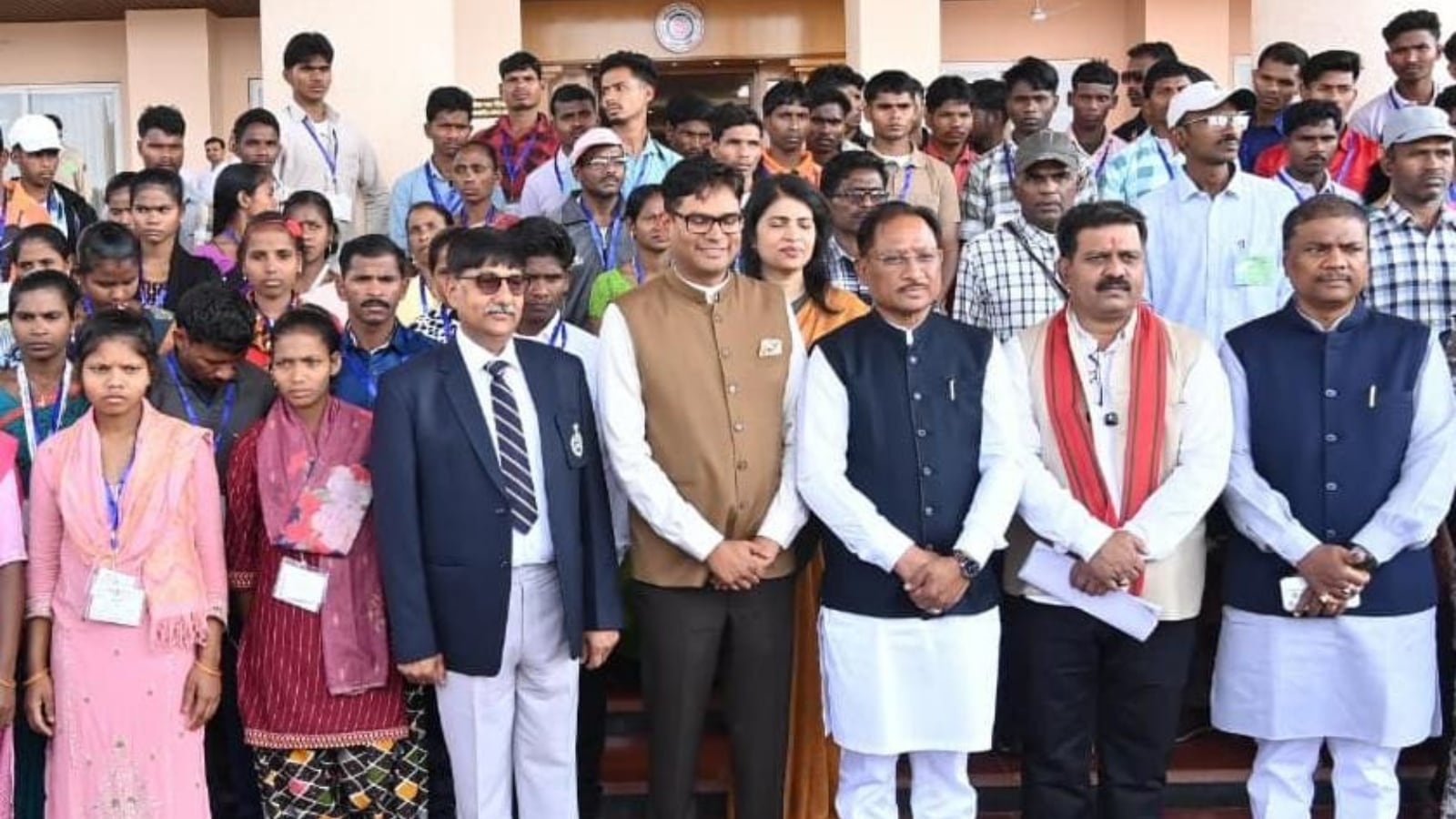
About 120 surrendered Maoists — including a former Central Committee Member (CCM) — visited the newly built Vidhan Sabha in New Raipur Friday as part of the Chhattisgarh government’s rehabilitation efforts to integrate them into the democratic system.
Among them was former CCM Takkalappalli Vasudeva Rao, alias Ashanna alias Rupesh, 59, known as the Maoists’ bombmaker and allegedly involved in major attacks, including the 2003 assassination attempt on Andhra Pradesh Chief Minister Chandrababu Naidu.
This comes as security forces intensify operations ahead of the central government’s March 31 deadline to end the insurgency.
Welcoming them with a traditional ‘Jai Johar’ greeting and promising them safety, dignity, and rehabilitation, Chief Minister Vishnu Deo Sai said: “It’s a matter of pride for us as the good rehabilitation policy we had brought has shown results. Over 2,500 Maoists have surrendered. It is a special day today as 120 Maoists have come to Vidhan Sabha and saw the proceedings and took photos with our ministers and DGP. We had a conversation with them, they are most welcome here and we will think about their future. They (surrendered Maoists) looked very happy”.
Showing respect to former Maoists who do not like to be associated with the word “surrender”, state Home Minister Vijay Sharma said: “In our entire process we have not used the word surrender but rehabilitated those who chose to return to the mainstream. They now believe in the Indian constitution and democratic processes and it’s a historic day because they (Maoists) have come to the temple of democracy and witnessed democratic process and now they have completely integrated into democracy”.
After witnessing the proceedings, Rupesh told the media: “I thank the government for giving all of us the opportunity to visit the Vidhan Sabha and showing respect. We want to work for the people and will put this experience to use”.
When asked about his new life after the surrender, Rupesh said it was “nothing special”.
“We are still here as per the rehabilitation policy. We have not gone outside. I want to do a lot of things. Let’s see what happens in the future,” he said.
When asked whether he will enter politics, he said: “I’m in politics from the beginning. Have done politics and still I am in politics”.
Apart from Rupesh, the group included 54 women, five former members of the Dandakaranya Special Zonal Committee (DKSZC), seven former Divisional Committee members, 33 former Area Committee members, and 84 ex-party members of the outlawed Communist Party of India (Maoist).
The chair in the Assembly described the occasion as “rare and historic”, welcoming the former Maoists and congratulating them for rejoining the democratic mainstream and accepting the Constitution.
On Thursday night, Sharma also hosted a dinner for the rehabilitation group at his residence in Nava Raipur Atal Nagar.
Last October, Rupesh, along with 209 Maoists from Abujhmad, had surrendered before Bastar Police, returning 153 weapons, including automatic guns such as 19 AK-47 rifles, 23 INSAS rifles, 17 Self Loading Rifles (SLR), and 36 .303 guns, in Jagdalpur city of Bastar district.
Jayprakash S Naidu is a Principal Correspondent for The Indian Express, currently serving as the state correspondent for Chhattisgarh. With an extensive career in frontline journalism, he reports on the political, security, and humanitarian landscape of Central India.
Expertise and Experience
Specialized Conflict Reporting: Jayprakash is a leading voice on the Maoist/Naxalite conflict in the Bastar region. His reporting provides a critical, ground-level view of:
Internal Security: Tracking high-stakes encounters, surrender programs for senior Maoist leaders, and the establishment of security camps in formerly inaccessible "heartland" villages.
Tribal Rights & Displacement: Investigative reporting on the identity and land struggles of thousands of displaced tribals fleeing conflict zones for neighboring states.
Governance & Bureaucratic Analysis: He consistently monitors the evolution of Chhattisgarh as it marks 25 years of statehood, covering:
Electoral Politics: Analyzing the shift in power between the BJP and Congress and the impact of regional tribal movements.
Public Policy: Reporting on landmark infrastructure projects (e.g., mobile connectivity in remote zones) and judicial interventions, such as High Court rulings on civil and family law.
Diverse Investigative Background: Prior to his current focus on Chhattisgarh, Jayprakash held reported from Maharashtra, where he specialized in:
Crisis & Disaster Management: Notable for his extensive coverage of the Cyclone Tauktae barge tragedy (P-305) and the COVID-19 pandemic’s impact on frontline personnel.
Legal & Human Rights: Investigative pieces for platforms like Article-14, focusing on police accountability and custodial deaths across India.
Environmental & Social Justice: Authoritative reporting on the Hasdeo Aranya forest protests and the approval of major tiger reserves, highlighting the tension between industrial mining and environmental preservation. ... Read More
Stay updated with the latest - Click here to follow us on Instagram
Among them was former CCM Takkalappalli Vasudeva Rao, alias Ashanna alias Rupesh, 59, known as the Maoists’ bombmaker and allegedly involved in major attacks, including the 2003 assassination attempt on Andhra Pradesh Chief Minister Chandrababu Naidu.
This comes as security forces intensify operations ahead of the central government’s March 31 deadline to end the insurgency.
Welcoming them with a traditional ‘Jai Johar’ greeting and promising them safety, dignity, and rehabilitation, Chief Minister Vishnu Deo Sai said: “It’s a matter of pride for us as the good rehabilitation policy we had brought has shown results. Over 2,500 Maoists have surrendered. It is a special day today as 120 Maoists have come to Vidhan Sabha and saw the proceedings and took photos with our ministers and DGP. We had a conversation with them, they are most welcome here and we will think about their future. They (surrendered Maoists) looked very happy”.
Showing respect to former Maoists who do not like to be associated with the word “surrender”, state Home Minister Vijay Sharma said: “In our entire process we have not used the word surrender but rehabilitated those who chose to return to the mainstream. They now believe in the Indian constitution and democratic processes and it’s a historic day because they (Maoists) have come to the temple of democracy and witnessed democratic process and now they have completely integrated into democracy”.
After witnessing the proceedings, Rupesh told the media: “I thank the government for giving all of us the opportunity to visit the Vidhan Sabha and showing respect. We want to work for the people and will put this experience to use”.
When asked about his new life after the surrender, Rupesh said it was “nothing special”.
“We are still here as per the rehabilitation policy. We have not gone outside. I want to do a lot of things. Let’s see what happens in the future,” he said.
When asked whether he will enter politics, he said: “I’m in politics from the beginning. Have done politics and still I am in politics”.
Apart from Rupesh, the group included 54 women, five former members of the Dandakaranya Special Zonal Committee (DKSZC), seven former Divisional Committee members, 33 former Area Committee members, and 84 ex-party members of the outlawed Communist Party of India (Maoist).
The chair in the Assembly described the occasion as “rare and historic”, welcoming the former Maoists and congratulating them for rejoining the democratic mainstream and accepting the Constitution.
On Thursday night, Sharma also hosted a dinner for the rehabilitation group at his residence in Nava Raipur Atal Nagar.
Last October, Rupesh, along with 209 Maoists from Abujhmad, had surrendered before Bastar Police, returning 153 weapons, including automatic guns such as 19 AK-47 rifles, 23 INSAS rifles, 17 Self Loading Rifles (SLR), and 36 .303 guns, in Jagdalpur city of Bastar district.
Jayprakash S Naidu is a Principal Correspondent for The Indian Express, currently serving as the state correspondent for Chhattisgarh. With an extensive career in frontline journalism, he reports on the political, security, and humanitarian landscape of Central India.
Expertise and Experience
Specialized Conflict Reporting: Jayprakash is a leading voice on the Maoist/Naxalite conflict in the Bastar region. His reporting provides a critical, ground-level view of:
Internal Security: Tracking high-stakes encounters, surrender programs for senior Maoist leaders, and the establishment of security camps in formerly inaccessible "heartland" villages.
Tribal Rights & Displacement: Investigative reporting on the identity and land struggles of thousands of displaced tribals fleeing conflict zones for neighboring states.
Governance & Bureaucratic Analysis: He consistently monitors the evolution of Chhattisgarh as it marks 25 years of statehood, covering:
Electoral Politics: Analyzing the shift in power between the BJP and Congress and the impact of regional tribal movements.
Public Policy: Reporting on landmark infrastructure projects (e.g., mobile connectivity in remote zones) and judicial interventions, such as High Court rulings on civil and family law.
Diverse Investigative Background: Prior to his current focus on Chhattisgarh, Jayprakash held reported from Maharashtra, where he specialized in:
Crisis & Disaster Management: Notable for his extensive coverage of the Cyclone Tauktae barge tragedy (P-305) and the COVID-19 pandemic’s impact on frontline personnel.
Legal & Human Rights: Investigative pieces for platforms like Article-14, focusing on police accountability and custodial deaths across India.
Environmental & Social Justice: Authoritative reporting on the Hasdeo Aranya forest protests and the approval of major tiger reserves, highlighting the tension between industrial mining and environmental preservation. ... Read More
Stay updated with the latest - Click here to follow us on Instagram
AI Description
The article discusses the integration of former Maoists into the democratic process in Chhattisgarh. It highlights the visit of 120 ex-Maoists, including a notable former Central Committee Member, to the Vidhan Sabha as part of rehabilitation efforts.