710
11 days ago
2 Jodhpur sisters found dead before marriage, grooms wed 2 others in hrs: ‘They never said anything…
Summary
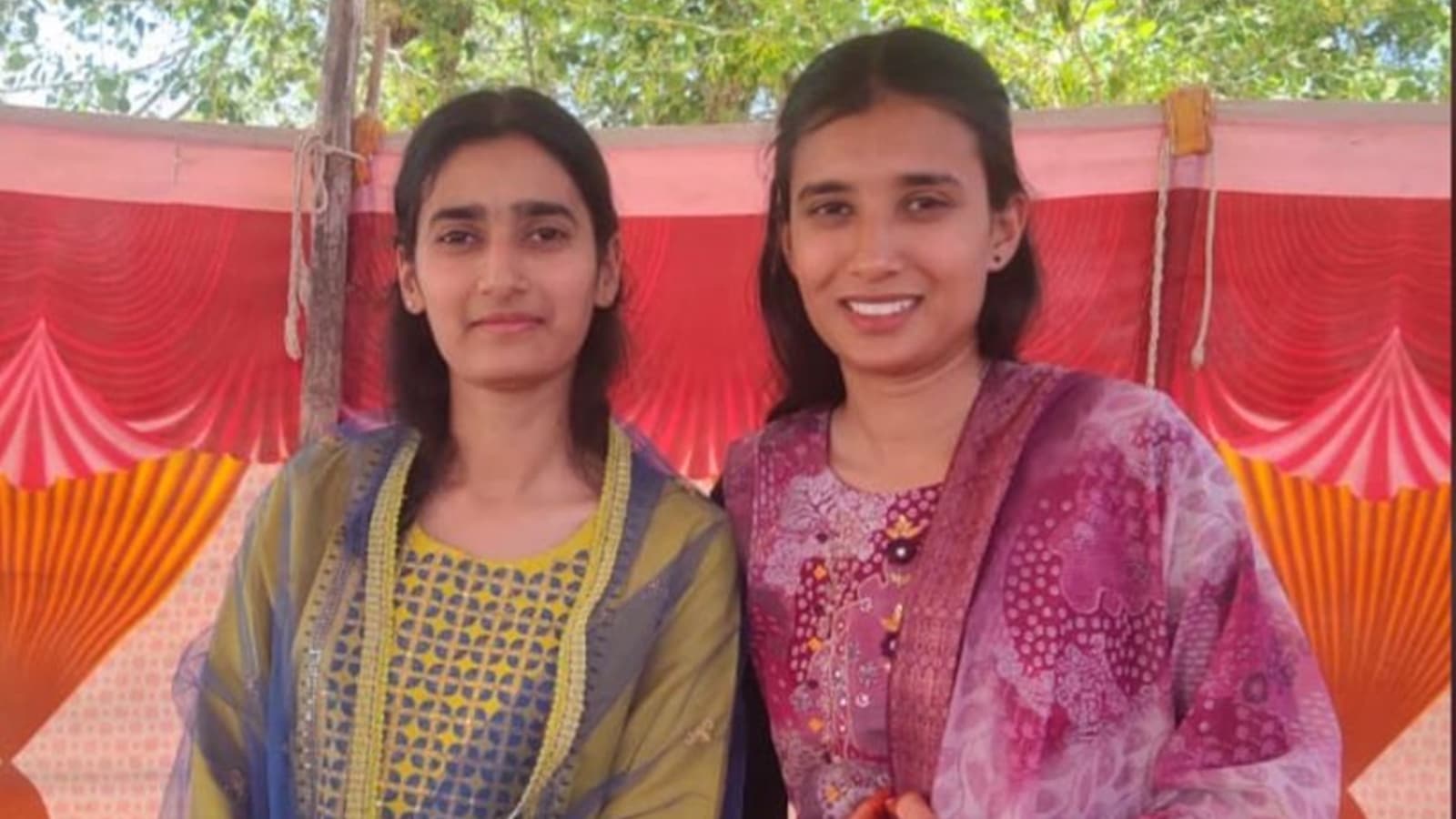
In the early hours of February 21, wedding celebrations were in full swing at the Kanwar house at Manai village near Jodhpur city. Sisters Shobha (25) and Vimla (23) Kanwar were to be married to two cousin brothers.
Instead, a little while after the two went to their rooms for some “rest” before the wedding, they were found dead.
Hours later, the cousins whom the two women were to get married to had wed two others.
The family and friends of Shobha and Vimla are in shock, and police have not made any breakthrough, in the absence of a suicide note, in the case of their deaths.
As for their lives, stray clues indicate two women who had done their graduation by sheer force of will, were working as teachers, and were to be married to two men whom they had never met, and move to a remote village where jobs were few.
One of the tents put up for the wedding is still standing at the women’s home, now being used by mourners. On the verandah lie items that were to be given as wedding “gifts” – a refrigerator, a double bed, big steel boxes.
Father Deep Singh Rathore, 49, says his eldest daughter Jahnvi discovered Shobha and Vimla lying on the floor. “We called the village doctor, who told us to take them to Jodhpur. They were declared dead at hospital,” says Deep.
While Jahnvi, 27, is married, there is a fourth sister, Laxmi, who is in Class 11.
While poisoning is suspected as the reason for the sisters’ deaths, the Investigating Officer at Soorsagar Police Station in Jodhpur, Mana Ram, says they have not recovered any source of the same nor a suicide note. “The picture will be clear once the FSL report is out. We are checking phone logs and the social media of the women for leads.”
The Additional DCP, West Jodhpur, Roshan Meena says they had found the Instagram accounts of the sisters deactivated, but had recovered the same.
Deep Singh, who keeps breaking down as he talks, says he has no idea what prompted his daughters to “kill themselves”. “They had even gone to Jodhpur for wedding shopping and to visit a parlour. They had invited their colleagues from the school where they taught, as well as friends in Rajsamand, where we lived before moving to our village in 2018.”
Watching mourners come and go, mother Soori Kanwar, who has a long veil covering her head and face and is surrounded by women – who sit apart from the men – denies Shobha and Vimla were not happy with the alliance.
“They never told us anything, not even their sisters… We are not monsters to have forcibly married them off,” says Soori.
The village the cousins who were to be grooms belong to is Jaimala near Pokharan, about 3 hours from Manai.
Only one of the fathers, Vijay Singh, speaks, refusing to share any details of the cousins apart from the fact that they work on the family’s 300-bigha land and take care of their large herd of sheep and goats.
Vijay says they were all set to leave with the baraat at 7 am on February 21 when they heard about the death of Shobha and Vimla. “We got a call from their family at around 5.30 am, saying we should call off the baraat,” he says.
However, says the family, as per the traditions of the Marwar region in Rajasthan to which both sides belong, once “haldi” has been applied, it’s a matter of honour that a wedding takes place. The family consulted among themselves, with Vijay and the father of the other groom, Nimbu Singh, asking if anybody had a solution or could suggest other alliances.
According to the family, two people came forward with wedding proposals. Hence, Vijay says, while one of the cousins married a woman from Khetolai in Bikaner, the other wed a woman belonging to Deria Maria in Jodhpur district. The new brides have studied till Class 12.
While one of the reasons Vijay says they “selected” Shobha and Vimla for the cousins was that they were educated, he admits they would have been expected to help out at home unless they cleared a recruitment test and landed a government job.
Jaimala has few employment opportunities apart from labour work or teaching at a government school. There are no private schools.
Vijay says there was no contact between the cousins and the sisters during their engagement period. “It is taboo in our community. If a guy even tries to contact the girl, engagement gets called off,” asserts Nimbu.
With fathers from the two sides fixing the match, not even photos had been exchanged, adds Vijay.
While expressing his sympathies with Deep Singh, Vijay says: “In a way it is good that they did not talk, or else allegations would have been made against our sons.”
At the private school where they taught, located 7 km from their village Manai, Shobha and Vimla are remembered fondly. Insisting that both their names and that of the school not be mentioned, a staff member says: “The sisters were sweet, dedicated and hardworking. They started working while they were doing their graduation, and used the salary to pay for it. Starting with kindergarten classes, they were promoted to higher sections after they completed their B.Ed. They were also given administrative responsibilities.”
Colleagues say the two informed the school director in December about their wedding, and that on February 7, a “farewell” was held where the sisters invited all of them. For the wedding, they had invited teachers no longer employed with the school as well.
“As the day approached for them to leave, however, they were upset and often started crying,” says a colleague. “The two, it seems, were not happy going to a village with no employment prospects. We tried to console them saying things would change… to just keep patience.”
Parul Kulshrestha is a Principal Correspondent for The Indian Express, based in Rajasthan. A lawyer turned journalist, she brings a unique cross-disciplinary perspective to her reporting, blending legal precision with deep social inquiry to cover one of India's most culturally and politically vibrant regions.
Expertise and Experience
Legal-Journalistic Synergy: Parul’s transition from a legal background to mainstream journalism provides her with a distinct advantage in interpreting policy, legislation, and judicial impacts. This expertise allows her to "read between the lines" of government orders and court rulings affecting the public.
Diverse Beat: With years of experience across both mainstream newsrooms and independent journalism, she has built high-level authority in several critical areas:
Nomadic Tribes & Marginalized Communities: She is recognized for her sensitive and in-depth reporting on the struggles and rights of Rajasthan's nomadic populations, often giving a voice to those outside the traditional political spotlight.
Gender & Social Justice: Parul focuses on the intersection of law and gender, covering issues ranging from women’s safety and reproductive rights to the socio-economic empowerment of rural women.
Environmental & Political Reporting: She tracks Rajasthan’s complex political landscape—including electoral shifts and bureaucratic changes—alongside critical environmental concerns like water scarcity and land use.
Academic & Professional Pedigree: Her background as a lawyer, combined with her rise to the rank of Principal Correspondent at a national broadsheet, establishes her as a senior voice in the media landscape. ... Read More
Stay updated with the latest - Click here to follow us on Instagram
Instead, a little while after the two went to their rooms for some “rest” before the wedding, they were found dead.
Hours later, the cousins whom the two women were to get married to had wed two others.
The family and friends of Shobha and Vimla are in shock, and police have not made any breakthrough, in the absence of a suicide note, in the case of their deaths.
As for their lives, stray clues indicate two women who had done their graduation by sheer force of will, were working as teachers, and were to be married to two men whom they had never met, and move to a remote village where jobs were few.
One of the tents put up for the wedding is still standing at the women’s home, now being used by mourners. On the verandah lie items that were to be given as wedding “gifts” – a refrigerator, a double bed, big steel boxes.
Father Deep Singh Rathore, 49, says his eldest daughter Jahnvi discovered Shobha and Vimla lying on the floor. “We called the village doctor, who told us to take them to Jodhpur. They were declared dead at hospital,” says Deep.
While Jahnvi, 27, is married, there is a fourth sister, Laxmi, who is in Class 11.
While poisoning is suspected as the reason for the sisters’ deaths, the Investigating Officer at Soorsagar Police Station in Jodhpur, Mana Ram, says they have not recovered any source of the same nor a suicide note. “The picture will be clear once the FSL report is out. We are checking phone logs and the social media of the women for leads.”
The Additional DCP, West Jodhpur, Roshan Meena says they had found the Instagram accounts of the sisters deactivated, but had recovered the same.
Deep Singh, who keeps breaking down as he talks, says he has no idea what prompted his daughters to “kill themselves”. “They had even gone to Jodhpur for wedding shopping and to visit a parlour. They had invited their colleagues from the school where they taught, as well as friends in Rajsamand, where we lived before moving to our village in 2018.”
Watching mourners come and go, mother Soori Kanwar, who has a long veil covering her head and face and is surrounded by women – who sit apart from the men – denies Shobha and Vimla were not happy with the alliance.
“They never told us anything, not even their sisters… We are not monsters to have forcibly married them off,” says Soori.
The village the cousins who were to be grooms belong to is Jaimala near Pokharan, about 3 hours from Manai.
Only one of the fathers, Vijay Singh, speaks, refusing to share any details of the cousins apart from the fact that they work on the family’s 300-bigha land and take care of their large herd of sheep and goats.
Vijay says they were all set to leave with the baraat at 7 am on February 21 when they heard about the death of Shobha and Vimla. “We got a call from their family at around 5.30 am, saying we should call off the baraat,” he says.
However, says the family, as per the traditions of the Marwar region in Rajasthan to which both sides belong, once “haldi” has been applied, it’s a matter of honour that a wedding takes place. The family consulted among themselves, with Vijay and the father of the other groom, Nimbu Singh, asking if anybody had a solution or could suggest other alliances.
According to the family, two people came forward with wedding proposals. Hence, Vijay says, while one of the cousins married a woman from Khetolai in Bikaner, the other wed a woman belonging to Deria Maria in Jodhpur district. The new brides have studied till Class 12.
While one of the reasons Vijay says they “selected” Shobha and Vimla for the cousins was that they were educated, he admits they would have been expected to help out at home unless they cleared a recruitment test and landed a government job.
Jaimala has few employment opportunities apart from labour work or teaching at a government school. There are no private schools.
Vijay says there was no contact between the cousins and the sisters during their engagement period. “It is taboo in our community. If a guy even tries to contact the girl, engagement gets called off,” asserts Nimbu.
With fathers from the two sides fixing the match, not even photos had been exchanged, adds Vijay.
While expressing his sympathies with Deep Singh, Vijay says: “In a way it is good that they did not talk, or else allegations would have been made against our sons.”
At the private school where they taught, located 7 km from their village Manai, Shobha and Vimla are remembered fondly. Insisting that both their names and that of the school not be mentioned, a staff member says: “The sisters were sweet, dedicated and hardworking. They started working while they were doing their graduation, and used the salary to pay for it. Starting with kindergarten classes, they were promoted to higher sections after they completed their B.Ed. They were also given administrative responsibilities.”
Colleagues say the two informed the school director in December about their wedding, and that on February 7, a “farewell” was held where the sisters invited all of them. For the wedding, they had invited teachers no longer employed with the school as well.
“As the day approached for them to leave, however, they were upset and often started crying,” says a colleague. “The two, it seems, were not happy going to a village with no employment prospects. We tried to console them saying things would change… to just keep patience.”
Parul Kulshrestha is a Principal Correspondent for The Indian Express, based in Rajasthan. A lawyer turned journalist, she brings a unique cross-disciplinary perspective to her reporting, blending legal precision with deep social inquiry to cover one of India's most culturally and politically vibrant regions.
Expertise and Experience
Legal-Journalistic Synergy: Parul’s transition from a legal background to mainstream journalism provides her with a distinct advantage in interpreting policy, legislation, and judicial impacts. This expertise allows her to "read between the lines" of government orders and court rulings affecting the public.
Diverse Beat: With years of experience across both mainstream newsrooms and independent journalism, she has built high-level authority in several critical areas:
Nomadic Tribes & Marginalized Communities: She is recognized for her sensitive and in-depth reporting on the struggles and rights of Rajasthan's nomadic populations, often giving a voice to those outside the traditional political spotlight.
Gender & Social Justice: Parul focuses on the intersection of law and gender, covering issues ranging from women’s safety and reproductive rights to the socio-economic empowerment of rural women.
Environmental & Political Reporting: She tracks Rajasthan’s complex political landscape—including electoral shifts and bureaucratic changes—alongside critical environmental concerns like water scarcity and land use.
Academic & Professional Pedigree: Her background as a lawyer, combined with her rise to the rank of Principal Correspondent at a national broadsheet, establishes her as a senior voice in the media landscape. ... Read More
Stay updated with the latest - Click here to follow us on Instagram
AI Description
Two sisters from Jodhpur died by suicide hours before their wedding. The grooms subsequently married other women within hours of the incident.