710
8 days ago
Iran: EU leaders set for meeting, oil prices soar amid war
Summary
European Union diplomats are set to hold a video conference with leaders in the Middle East to get their assessment of the situation in the region. Plus, oil prices soar amid escalating conflict. DW has the latest.
Here is a roundup of the latest developments in the US-Israeli war with Iran on Monday, March 9:
Countries around the world are seeking to limit the impact on their economies and consumers as the impact of the Iran war begins to be felt.
France on Monday will host a video meeting of the Group of Seven (G7) economies as oil prices surged in early trading.
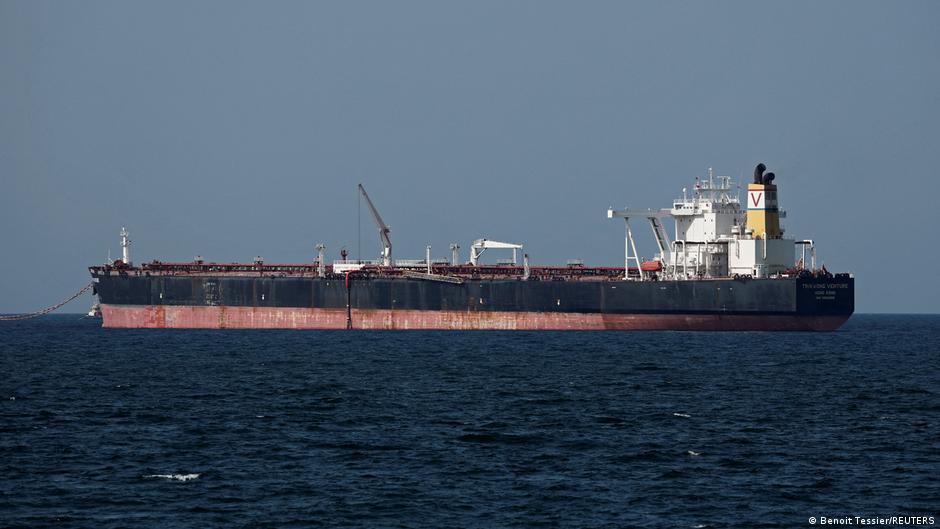
The oil price jumped 25%, while OPEC producers Kuwait and Iraq cut output over the weekend as Strait of Hormuz — a critical trade route — remained effectively shut.
Reuters cited a French government source as saying that G7 finance ministers would discuss the possibility of a joint release of oil reserves.
The meeting also comes after Iran named Mojtaba Khamenei to succeed his father Ali Khamenei as supreme leader.
"We're going to listen to what is coming up from the ground, from businesses, from economists in these different parts of the world," French finance minister Roland Lescure told Franceinfo radio.
France holds the rotating presidency of the G7, which also includes Canada, Germany, Italy, Japan, the United Kingdom and the United States.
Bapco Energies, Bahrain's state oil company, declared a force majeure for its shipments following an Iranian attack on its refinery complex.
The state-run Bahrain News Agency reported the announced force majeure — which is a legal measure that releases a company from contractual obligations due to unforeseen or extraordinary circumstances.
The agency reported that the company’s operations "have been affected by the ongoing regional conflict in the Middle East and the recent attack on its refinery complex."
The company said that local demand could still be met.
According to the Observatory of Economic Complexity (OEC), the main destinations for Bahrain's oil exports are South Africa, Saudi Arabia, Singapore, France and Zambia.
France's President Emmanuel Macron will head to Cyprus just days after deploying a warship to the east of the Mediterranean island nation.
The French frigate Languedoc was ordered to waters off Cyprus in an effort to strengthen the EU member states' defensive capabilities.
The Charles de Gaulle aircraft carrier is also expected to arrive in the Eastern Mediterranean in the coming days.
The move comes after a Shahed drone struck a British air base, situated on the island's southern coast, last week.
The attack caused minor damage to a hangar at the RAF Akrotiri air base after midnight on March 2 and no casualties were reported.
British Typhoon and F-35 warplanes were scrambled from the air base shortly after midday that day and intercepted another two drones.
Macron is expected to meet with Cypriot President Nikos Christodoulides and Greek Prime Kyriakos Mitsotakis at Cyprus' main air base.
“Together with our European partners, the aim will be to strengthen security around Cyprus and in the Eastern Mediterranean,” a statement from Macron's office said.
EU Council President Antonio Costa and EU Commission President Ursula von der Leyen will hold a video conference with Middle East leaders to discuss the current situation.
"This exchange will provide an opportunity to hear leaders' assessments of the situation and to discuss further support from the EU and its member states to countries in the region, as well as ways to bring the current conflict to an end," Costa's spokesperson said.
Last week, foreign ministers from the EU's 27 member states discussed the situation with counterparts from the Gulf Cooperation Council.
They called for dialogue and diplomacy to resolve the unravelling crisis while also reiterating that Gulf states had the right to defend themselves against Iran.
The European Union's leaders are set to hold a video conference with leaders from the Middle East to discuss support from the bloc to countries in the region among other things, a spokesperson said.
Iran named a son of its late supreme leader,Mojtaba Khamenei, as his successor. US President Donald Trump already had expressed disdain for Mojtaba Khamenei, calling him "unacceptable."
The war is also now in its tenth day. With it showing no signs of slowing down, there are growing fears that inflation could surge again.
Crude oil prices crossed $110 per barrel on Sunday, after major Middle East producers cut oil output due to the continued closure of the Strait of Hormuz.
Plus, Iranian missiles and drones continue to hit Gulf countries with no US military presence. No other country other than the US and Israel has said it is attacking Iran.
Saudi Arabia's defense ministry has said an Iranian drone attack was thwarted early on Monday.
The drone attack was targeting an oil field in eastern Saudi Arabia, near the border with the United Arab Emirates.
"Four drones heading towards the Shaybah oil field were intercepted and destroyed," a statement said.
Iran's continued air attacks on its neighbors in the region have angered many in the Gulf.
Riyadh stepped up its rhetoric on Monday, warning Tehran that it would be the "biggest loser" if it continues with its strikes against Arab countries.
The US-Israel war with Iran is sending ripple effects across Asia and Europe, with disrupted supply chains pushing fuel prices higher. Could this trigger another global economic blow as markets come under growing strain?
To view this video please enable JavaScript, and consider upgrading to a web browser that supports HTML5 video
Israel's military said early Monday that its air force had begun an "additional wave" of strikes against unspecified "regime infrastructure" in central Iran.
The IDF also said it had struck sites belonging to the Iran-backed Lebanese militant group Hezbollah in Beirut.
Israel has been launching daily attacks on Iran since February 28, when Iran's former supreme leader Ayatollah Khamenei was killed.
Lebanon was drawn into the war the following Monday, March 2, after Hezbollah fired rockets at Israel in response to the killing of the former supreme leader.
Meanwhile, Khamenei's son, Mojtaba, has been appoined to succeed his father.
Israel has said that anyone named to the role of supreme leader would become a target for assassination.
The US-Israeli war with Iran and Tehran's sprawling retaliation against several Gulf states has seen the price of crude oil skyrocket to its highest level since the start of the war in Ukraine in 2022.
The price of Brent crude passed $114 (€98.98) per barrel on Monday, a 23% jump compared to Friday's closing price of $92.69.
West Texas Intermediate, the light, sweet crude oil produced in the United States, was also selling for about $114 per barrel, a 25% increase compared to Friday.
Asian stock markets plunged at opening on Monday amid the global oil price surge.
The war in the Middle East, which is in its second week, has severely impacted oil and gas production and exports in the region.
The Gulf typically accounts for about 20% of the world's oil. Around 15 million barrels of crude oil were shipped through the strait each day before the war began.
Cargo ships have largely stopped sailing through the Strait of Hormuz amid the threat of Iranian drone and missile attacks, which have also been targeting oil and gas production facilities across the region.
Iran's Assembly of Experts has chosen Ali Khamenei's son Mojtaba as the country's new supreme leader.
Read more here about how his selection shows that the Iranian regime, at war with the US and Israel, has opted for a confrontational path.
Several Gulf nations reported more Iranian air attacks overnight, as Tehran continues its retaliation to the US-Israeli attacks.
In Bahrain, officials said 32 people were injured overnight after an Iranian drone attack on the island of Sitra.
Four of the injured were "serious cases," Bahrain's Health Ministry said, adding that all of the injured were Bahraini citizens. Children were among those injured, the ministry said, including a two-month-old baby.
In Doha, the capital of neighboring Qatar, several explosions were heard.
Saudi Arabia, Kuwait and Qatar all reported fresh waves of Iranian missile and drone attacks early on Monday, most of which were intercepted.
Tehran has vowed to continue targeting countries in the region that allow their territory to be used to attack Iran.
Thank you for joining us as we bring you the latest news in the US-Israeli war with Iran.
DW will bring you the latest news, video and analysis as the United States and Israel continue their war against Iran and Tehran presses on with its regional retaliation.
Here is a roundup of the latest developments in the US-Israeli war with Iran on Monday, March 9:
Countries around the world are seeking to limit the impact on their economies and consumers as the impact of the Iran war begins to be felt.
France on Monday will host a video meeting of the Group of Seven (G7) economies as oil prices surged in early trading.
The oil price jumped 25%, while OPEC producers Kuwait and Iraq cut output over the weekend as Strait of Hormuz — a critical trade route — remained effectively shut.
Reuters cited a French government source as saying that G7 finance ministers would discuss the possibility of a joint release of oil reserves.
The meeting also comes after Iran named Mojtaba Khamenei to succeed his father Ali Khamenei as supreme leader.
"We're going to listen to what is coming up from the ground, from businesses, from economists in these different parts of the world," French finance minister Roland Lescure told Franceinfo radio.
France holds the rotating presidency of the G7, which also includes Canada, Germany, Italy, Japan, the United Kingdom and the United States.
Bapco Energies, Bahrain's state oil company, declared a force majeure for its shipments following an Iranian attack on its refinery complex.
The state-run Bahrain News Agency reported the announced force majeure — which is a legal measure that releases a company from contractual obligations due to unforeseen or extraordinary circumstances.
The agency reported that the company’s operations "have been affected by the ongoing regional conflict in the Middle East and the recent attack on its refinery complex."
The company said that local demand could still be met.
According to the Observatory of Economic Complexity (OEC), the main destinations for Bahrain's oil exports are South Africa, Saudi Arabia, Singapore, France and Zambia.
France's President Emmanuel Macron will head to Cyprus just days after deploying a warship to the east of the Mediterranean island nation.
The French frigate Languedoc was ordered to waters off Cyprus in an effort to strengthen the EU member states' defensive capabilities.
The Charles de Gaulle aircraft carrier is also expected to arrive in the Eastern Mediterranean in the coming days.
The move comes after a Shahed drone struck a British air base, situated on the island's southern coast, last week.
The attack caused minor damage to a hangar at the RAF Akrotiri air base after midnight on March 2 and no casualties were reported.
British Typhoon and F-35 warplanes were scrambled from the air base shortly after midday that day and intercepted another two drones.
Macron is expected to meet with Cypriot President Nikos Christodoulides and Greek Prime Kyriakos Mitsotakis at Cyprus' main air base.
“Together with our European partners, the aim will be to strengthen security around Cyprus and in the Eastern Mediterranean,” a statement from Macron's office said.
EU Council President Antonio Costa and EU Commission President Ursula von der Leyen will hold a video conference with Middle East leaders to discuss the current situation.
"This exchange will provide an opportunity to hear leaders' assessments of the situation and to discuss further support from the EU and its member states to countries in the region, as well as ways to bring the current conflict to an end," Costa's spokesperson said.
Last week, foreign ministers from the EU's 27 member states discussed the situation with counterparts from the Gulf Cooperation Council.
They called for dialogue and diplomacy to resolve the unravelling crisis while also reiterating that Gulf states had the right to defend themselves against Iran.
The European Union's leaders are set to hold a video conference with leaders from the Middle East to discuss support from the bloc to countries in the region among other things, a spokesperson said.
Iran named a son of its late supreme leader,Mojtaba Khamenei, as his successor. US President Donald Trump already had expressed disdain for Mojtaba Khamenei, calling him "unacceptable."
The war is also now in its tenth day. With it showing no signs of slowing down, there are growing fears that inflation could surge again.
Crude oil prices crossed $110 per barrel on Sunday, after major Middle East producers cut oil output due to the continued closure of the Strait of Hormuz.
Plus, Iranian missiles and drones continue to hit Gulf countries with no US military presence. No other country other than the US and Israel has said it is attacking Iran.
Saudi Arabia's defense ministry has said an Iranian drone attack was thwarted early on Monday.
The drone attack was targeting an oil field in eastern Saudi Arabia, near the border with the United Arab Emirates.
"Four drones heading towards the Shaybah oil field were intercepted and destroyed," a statement said.
Iran's continued air attacks on its neighbors in the region have angered many in the Gulf.
Riyadh stepped up its rhetoric on Monday, warning Tehran that it would be the "biggest loser" if it continues with its strikes against Arab countries.
The US-Israel war with Iran is sending ripple effects across Asia and Europe, with disrupted supply chains pushing fuel prices higher. Could this trigger another global economic blow as markets come under growing strain?
To view this video please enable JavaScript, and consider upgrading to a web browser that supports HTML5 video
Israel's military said early Monday that its air force had begun an "additional wave" of strikes against unspecified "regime infrastructure" in central Iran.
The IDF also said it had struck sites belonging to the Iran-backed Lebanese militant group Hezbollah in Beirut.
Israel has been launching daily attacks on Iran since February 28, when Iran's former supreme leader Ayatollah Khamenei was killed.
Lebanon was drawn into the war the following Monday, March 2, after Hezbollah fired rockets at Israel in response to the killing of the former supreme leader.
Meanwhile, Khamenei's son, Mojtaba, has been appoined to succeed his father.
Israel has said that anyone named to the role of supreme leader would become a target for assassination.
The US-Israeli war with Iran and Tehran's sprawling retaliation against several Gulf states has seen the price of crude oil skyrocket to its highest level since the start of the war in Ukraine in 2022.
The price of Brent crude passed $114 (€98.98) per barrel on Monday, a 23% jump compared to Friday's closing price of $92.69.
West Texas Intermediate, the light, sweet crude oil produced in the United States, was also selling for about $114 per barrel, a 25% increase compared to Friday.
Asian stock markets plunged at opening on Monday amid the global oil price surge.
The war in the Middle East, which is in its second week, has severely impacted oil and gas production and exports in the region.
The Gulf typically accounts for about 20% of the world's oil. Around 15 million barrels of crude oil were shipped through the strait each day before the war began.
Cargo ships have largely stopped sailing through the Strait of Hormuz amid the threat of Iranian drone and missile attacks, which have also been targeting oil and gas production facilities across the region.
Iran's Assembly of Experts has chosen Ali Khamenei's son Mojtaba as the country's new supreme leader.
Read more here about how his selection shows that the Iranian regime, at war with the US and Israel, has opted for a confrontational path.
Several Gulf nations reported more Iranian air attacks overnight, as Tehran continues its retaliation to the US-Israeli attacks.
In Bahrain, officials said 32 people were injured overnight after an Iranian drone attack on the island of Sitra.
Four of the injured were "serious cases," Bahrain's Health Ministry said, adding that all of the injured were Bahraini citizens. Children were among those injured, the ministry said, including a two-month-old baby.
In Doha, the capital of neighboring Qatar, several explosions were heard.
Saudi Arabia, Kuwait and Qatar all reported fresh waves of Iranian missile and drone attacks early on Monday, most of which were intercepted.
Tehran has vowed to continue targeting countries in the region that allow their territory to be used to attack Iran.
Thank you for joining us as we bring you the latest news in the US-Israeli war with Iran.
DW will bring you the latest news, video and analysis as the United States and Israel continue their war against Iran and Tehran presses on with its regional retaliation.
AI Description
The article discusses an upcoming video conference between EU diplomats and Middle Eastern leaders to assess the regional situation amid rising tensions. It also highlights the impact of escalating conflict on oil prices.