210
1 day ago
Germany news: Merz faces new election test in Hesse
Summary
The far-right Alternative for Germany party is poised for fresh gains in municipal elections in the central state of Hesse. As fuel prices soar, German MPs are urging measures to offset the pain. DW has the latest.
Here are the top headlines from Germany on Saturday, March 14 and Sunday, March 15, 2026:
German lawmakers have been criticizing reports that the European People's Party (EPP), which includes Germany's conservative Christian Democrat/Christian Social Union (CDU/CSU) bloc, coordinated with the far-right Alternative for Germany (AfD) and other such groups in the European Parliament.
The criticism followed media reports that cited chat messages suggesting the cooperation was taking place. The alleged cooperation revolved around a vote on tightening the EU's migration laws.
Center-left Social Democrat (SPD) lawmaker Ralf Stegner wrote on X that, if the report proves true, it would represent a "serious breach of taboo." He also said EPP leader Manfred Weber of the CSU should resign.
Rene Repasi, head of the SPD delegation in the European Parliament, told the DPA news agency that CDU coordinator Lena Düpont should clarify whether she knew about what he described as a structured form of cooperation.
Erik Marquardt, leader of the German Greens delegation in the European Parliament, warned that involving far-right forces in democratic processes could mark the beginning of the end for liberal democracies in Europe.
Marie-Agnes Strack-Zimmermann, a European lawmaker for Germany's business-focused Free Democrats, said anyone who publicly defends democratic cooperation but plays with it behind closed doors risks undermining trust.
AfD delegation leader Rene Aust welcomed the reports, telling German daily Bild that the party was helping shape European migration policy and that cooperation across party lines was replacing what he called political "firewalls."
To view this video please enable JavaScript, and consider upgrading to a web browser that supports HTML5 video
A man has been injured after a power bank exploded in his trouser pocket in the northern port city of Hamburg, German news agency DPA has reported.
Firefighters said the cause of the explosion remains unclear. The man suffered burns to his genital area and thigh and was taken to hospital after the incident in the Duvenstedt district.
Germany's TÜV safety organization said power banks can overheat or catch fire if they are damaged or dropped, as this can cause short circuits inside the battery cell.
The heat generated can in the worst case trigger a fire.
According to TÜV, damaged power banks may show warning signs such as swollen or deformed casings, melted sections on the housing, or discoloration on metal parts.
In such cases, the devices should be disposed of properly, TÜV said.
As the debate over Germany's nuclear energy phase-out continues, Bavaria's state premier, Markus Söder, says he plans to allow the construction of mini-nuclear power plants in his state.
"It's time for a new era of nuclear energy," Söder told the Bild am Sonntag newspaper.
Söder, the leader of the Christian Social Union (CSU), the Bavarian allies of Chancellor Friedrich Merz's Christian Democrats (CDU), advocated for the use of innovative modular small reactors and nuclear fusion to prevent a "return to old technology."
Söder maintained that Germany still needs "baseload-capable and CO2-free nuclear power" and said Bavaria, which is Germany's southernmost most federal state, is "ready for a pilot project."
In 2023, Germany completed the closure of its network of nuclear power plants, shutting down its last reactors and ending over six decades of atomic power.
Although Merz has said he regretted the nuclear phase-out, he recently insisted it was "irreversible."
European Commission President Ursula von der Leyen previously described the move by EU states to cut reliance on nuclear power as a "strategic mistake."
Politicians from Germany's coalition have called for urgent measures to tackle rising vehicle fuel prices caused by the United States and Israel's war with Iran.
In an interview with Germany's DPA news agency, Armand Zorn, the vice chair of the parliamentary group fo the center-left Social Democrats (SPD), called for a "fuel price cap."
"The prices for gasoline and diesel must not rise more sharply than the price of crude oil," Zorn told DPA.
"We should not rule out strong interventions such as the corporate restructuring of the industry," Zorn said. "We will be able to act at any time and are prepared to take further measures to limit prices."
Meanwhile, Saxony-Anhalt's state premier, Sven Schulze, from the center-right Christian Democrats (CDU), has called for cuts to the fuel tax.
He noted that tax revenues were set to increase as a result of the fuel price rise.
"The federal treasury must not profit from the oil price crisis," Schulze told the Bild am Sonntag newspaper.
Fuel prices in Germany have risen by more than a fifth since the Iran war began on February 28.
Motorists are currently paying an average of around €2.08 per liter for gasoline (Super E5) and up to €2.18 for diesel. Prices are even higher on major highways.
A task force appointed by the coalition parties in the Bundestag will meet on Monday to decide what measures can be introduced.
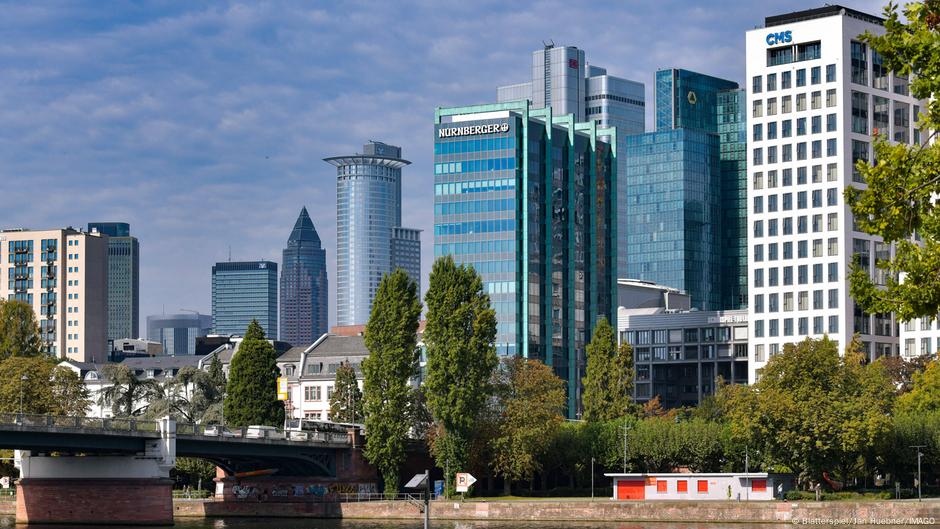
Germany's "superelection" year continues, with elections in the western state of Hesse — home to the country's financial hub, Frankfurt.
The country faces five state parliamentary elections in 2026, including in Berlin and Saxony-Anhalt.
The Hesse vote is primarily local, electing municipal and district councils and, in some cases, mayors.
But it will also serve as another test for Chancellor Friedrich Merz's ruling coalition, which is contending with surging support for the far-right Alternative for Germany (AfD) party.
Polls suggest the AfD could jump from 18.4% support in the last state election in 2023 to become potentially the second-largest force in several Hesse districts.
In the previous state vote, Merz's center-right Christian Democrats (CDU) were the strongest force with 28.5%, followed by the Social Democrats (SPD), their junior partner in the federal government, with 24%.
That kind of shift, even at the local level, would reinforce a national trend that will shape campaigning for the rest of the year. The AfD came second in last year's federal elections.
The party has the potential to win the upcoming vote in the eastern state of Saxony-Anhalt in September.All other parties refuse to work with the AfD to keep the far-right from power, in a practice known as the "firewall."
The CDU was narrowly defeated by the Greens last weekend in a state election in southern Baden-Württemberg, which neighbors Hesse.
We are resuming our coverage of headlines in Germany on Sunday, March 15.
We're pausing our coverage this evening and we'll be back tomorrow with the latest headlines out of Germany.
Bayern Munich have battled to a dramatic 1-1 draw at Bayer Leverkusen, trimming the champions' Bundesliga lead to nine points.
Leverkusen struck first through Aleix Garcia after left winger Luis Diaz lost possession. Bayern's injury-hit side then went down to 10 men when Nicolas Jackson was sent off before halftime for a reckless foul.
Harry Kane thought he had equalized just after the hour, but the goal was ruled out for handball following a VAR review.
Diaz eventually leveled on 69 minutes from a Michael Olise assist after a loose pass by Robert Andrich. The Colombian then received a second yellow card for diving in the 84th minute, a decision he fiercely protested.
With the dropped points, Bayern’s closest rivals Borussia Dortmund beat Augsburg 2-0, edging them two points closer but with only two points.
Elsewhere, third-placed Hoffenheim drew 1-1 with second-bottom Wolfsburg, while Eintracht Frankfurt edged bottom side Heidenheim 1-0 to keep their European hopes alive.
German flagship carrier Lufthansa has returned to normal operations after a two-day strike by its pilots.
"During the two strike days, more than 50% of the originally flight program could still be offered. On long-haul routes the share was even 60%" a spokesperson said regarding the cancellations.
The union which called the industrial action, Vereinigung Cockpit (VC), rebuked Lufthansa's played-down evaluation of the strike's impact.
The union was pushing for better pay and pensions for pilots, with cancellations impacting the hubs of Frankfurt and Munich.
VC said the strike was "very successful." Nearly 80% of the roughly 800 flights originally planned for day 1 of the strike were cancelled, the union said, with over 550 out of 700 planned flights cancelled on the second day of the action.
German philosopher and sociologist Jürgen Habermas, one of the most influential thinkers of the postwar era, has died at the age of 96.
Habermas died Saturday in Starnberg, Suhrkamp Verlag said, citing the family.
Continue reading here.
The Brandenburg branch of the center-left Social Democrats (SPD) has voted to form a coalition with the conservative Christian Democratic Union (CDU) in the eastern state.
97% of delegates at the SPD party conference voted in favour of the alliance that would allow the party to once again form a majority government.
The coaltiion agreement is set to be signed by Brandenburg Premier Dietmar Woidke of the SPD and state CDU leader Jan Redmann on Monday.
The SPD's coalition with the left-wing populist Sahra Wagenknecht Alliance (BSW) lost its parliamentary majority and then collapsed in January after multiple lawmakers left the BSW.
State Finance Minister Robert Crumbach also left the BSW and joined the SPD, maintaining his ministerial position after the coalition collapse.
Woidke has been leading a minority government since the coalition collapse and has ruled out new elections, instead turning to the CDU for support.
He has served as Brandenburg's premier since 2013 and formed the coalition with the BSW after elections in September 2024. The next state election is scheduled for 2029.
Belarusian opposition figure Maria Kolesnikova was personally handed the Charlemagne Prize on Saturday after having been awarded it in absentia in May 2022.
The ceremony was held in the western city of Aachen in North Rhine-Westphalia state.
The Charlemagne Prize recognizes people who have worked to advance European unity.
Kolesnikova was awarded with the prize alongside fellow opposition figures Sviatlana Tsikhanouskaya and Veronika Tsepkalo for their struggle for democratic rights, free elections and the respect of human dignity in Belarus.
She could not attend the 2022 ceremony as she had been arrested two years earlier as part of Minsk's crackdown on a wave of opposition protests.
She was released in mid-December, 2025, following international pressure and a US-brokered deal with Belarusian strongman Alexander Lukashenko.
German authorities have granted Kolesnikova political asylum and she now resides in Berlin.
Kolesnikova had already lived in Germany for 13 years before her arrest.
The ceremony on Saturday was also attended by Kolesnikova's sister, Tatsiana Khomich.
Kolesnikova has called for European politicians to engage in dialogue with Lukashenko, saying the EU has significant leverage over Minsk.
Germany did not record a significant drop in greenhouse gas emissions in 2025, the country's Environment Ministry said on Saturday.
Emissions were equivalent to around 649 million tons of CO2 in 2025, amounting to a drop of only 0.1% compared to the previous year, which the ministry described as insufficient.
Emissions dropped 3.4% in 2024.
The ministry warned that emissions would have to "fall by an average of 42 million tons of CO2 equivalent per year" for Germany to reach its climate targets.
Germany aims to cut greenhouse gas emissions by 65% by 2030 compared with 1990 levels.
The transport and building sectors saw an increase in emissions in 2025.
Meanwhile, Germany's economic slump led to a continued decrease in emissions in the industrial sector, while the energy and agricultural sectors were largely unchanged.
Germany is Europe's largest economy. Its traditionally strong manufacturing industry has been struggling amid high energy prices and increased competition from China in recent years.
German Chancellor Friedrich Merz has called for Germany to boost its economy's international competitiveness, while signaling it would be difficult for the country to meet its climate goals.
The number of Ukrainian men aged 18 to 63 in Germany has risen over the last year, according to official data cited by the Welt am Sonntag newspaper on Saturday.
Ukrainian men within that age range numbered 349,520 as of March 9, 2026, amounting to an increase of around 52,000 within a year, according to the figures.
The number of women aged 18 to 63 increased by nearly 24,000 within the same period.
Ukraine imposed martial law shortly after Russia launched its invasion of its neighbor on February 24, 2022, prohibiting men between the ages of 18 and 60 from leaving the country.
Ukraine's army initially drafted men between the ages of 27 and 60, with the minimum age then lowered to 25 in April 2024.
In late August 2025, Ukraine's government began allowing men between the ages of 18 and 22 to leave the country.
The Ukrainian military has been struggling to enlist enough new recruits as Russia's invasion grinds into its fifth year.
Germany's ruling conservative CDU/CSU has painted the influx of Ukrainian men as a burden on the country's welfare system.
"Young men of military age from Ukraine do not belong in the German social welfare system," CDU lawmaker Alexander Throm told the newspaper on Saturday, adding that Germany's government was discussing the matter with Kyiv.
In November, Chancellor Friedrich Merz urged Ukrainian President Volodymyr Zelenskyy to limit the number of young Ukrainian men coming to Germany.
The far-right Alternative for Germany party on Saturday also called for Germany to accept fewer arrivals from Ukraine, warning of "overloading" of the welfare system.
Meanwhile, the socialist Left Party expressed support for accepting Ukrainians fleeing the war.
"I understand every person who escapes this carnage by fleeing," the Left's Clara Bünger told Welt am Sonntag.
The environmentalist Greens called for Germany to provide opportunities to Ukrainian arrivals.
"Those who study and work here today can help rebuild Ukraine tomorrow. Therefore, it is also in our European interest to offer these people opportunities," Greens lawmaker Robin Wagner said.
German Digital Minister Karsten Wildberger said that an EU plan to loosen regulations on artificial intelligence didn't go far enough.
"I strongly warn against losing sight of the actual goal in the reforms to the AI Act: We need more relief and more freedom for AI developers," Wildberger told the Reuters news agency.
"We were able to achieve substantial improvements in the negotiations, but the proposal needs significantly more courage," he said.
Wildberger said that Europe could miss a "great opportunity" to increase competitiveness by making use of "cutting-edge technologies," adding that Berlin will continue to advocate the removal of unnecessary hurdles to innovation.
Companies in the EU have criticized the bloc, saying that its strict regulations have stifled innovation in the tech sector as Europe falls behind the US and China in the field of AI.
To view this video please enable JavaScript, and consider upgrading to a web browser that supports HTML5 video
Here are the top headlines from Germany on Saturday, March 14 and Sunday, March 15, 2026:
German lawmakers have been criticizing reports that the European People's Party (EPP), which includes Germany's conservative Christian Democrat/Christian Social Union (CDU/CSU) bloc, coordinated with the far-right Alternative for Germany (AfD) and other such groups in the European Parliament.
The criticism followed media reports that cited chat messages suggesting the cooperation was taking place. The alleged cooperation revolved around a vote on tightening the EU's migration laws.
Center-left Social Democrat (SPD) lawmaker Ralf Stegner wrote on X that, if the report proves true, it would represent a "serious breach of taboo." He also said EPP leader Manfred Weber of the CSU should resign.
Rene Repasi, head of the SPD delegation in the European Parliament, told the DPA news agency that CDU coordinator Lena Düpont should clarify whether she knew about what he described as a structured form of cooperation.
Erik Marquardt, leader of the German Greens delegation in the European Parliament, warned that involving far-right forces in democratic processes could mark the beginning of the end for liberal democracies in Europe.
Marie-Agnes Strack-Zimmermann, a European lawmaker for Germany's business-focused Free Democrats, said anyone who publicly defends democratic cooperation but plays with it behind closed doors risks undermining trust.
AfD delegation leader Rene Aust welcomed the reports, telling German daily Bild that the party was helping shape European migration policy and that cooperation across party lines was replacing what he called political "firewalls."
To view this video please enable JavaScript, and consider upgrading to a web browser that supports HTML5 video
A man has been injured after a power bank exploded in his trouser pocket in the northern port city of Hamburg, German news agency DPA has reported.
Firefighters said the cause of the explosion remains unclear. The man suffered burns to his genital area and thigh and was taken to hospital after the incident in the Duvenstedt district.
Germany's TÜV safety organization said power banks can overheat or catch fire if they are damaged or dropped, as this can cause short circuits inside the battery cell.
The heat generated can in the worst case trigger a fire.
According to TÜV, damaged power banks may show warning signs such as swollen or deformed casings, melted sections on the housing, or discoloration on metal parts.
In such cases, the devices should be disposed of properly, TÜV said.
As the debate over Germany's nuclear energy phase-out continues, Bavaria's state premier, Markus Söder, says he plans to allow the construction of mini-nuclear power plants in his state.
"It's time for a new era of nuclear energy," Söder told the Bild am Sonntag newspaper.
Söder, the leader of the Christian Social Union (CSU), the Bavarian allies of Chancellor Friedrich Merz's Christian Democrats (CDU), advocated for the use of innovative modular small reactors and nuclear fusion to prevent a "return to old technology."
Söder maintained that Germany still needs "baseload-capable and CO2-free nuclear power" and said Bavaria, which is Germany's southernmost most federal state, is "ready for a pilot project."
In 2023, Germany completed the closure of its network of nuclear power plants, shutting down its last reactors and ending over six decades of atomic power.
Although Merz has said he regretted the nuclear phase-out, he recently insisted it was "irreversible."
European Commission President Ursula von der Leyen previously described the move by EU states to cut reliance on nuclear power as a "strategic mistake."
Politicians from Germany's coalition have called for urgent measures to tackle rising vehicle fuel prices caused by the United States and Israel's war with Iran.
In an interview with Germany's DPA news agency, Armand Zorn, the vice chair of the parliamentary group fo the center-left Social Democrats (SPD), called for a "fuel price cap."
"The prices for gasoline and diesel must not rise more sharply than the price of crude oil," Zorn told DPA.
"We should not rule out strong interventions such as the corporate restructuring of the industry," Zorn said. "We will be able to act at any time and are prepared to take further measures to limit prices."
Meanwhile, Saxony-Anhalt's state premier, Sven Schulze, from the center-right Christian Democrats (CDU), has called for cuts to the fuel tax.
He noted that tax revenues were set to increase as a result of the fuel price rise.
"The federal treasury must not profit from the oil price crisis," Schulze told the Bild am Sonntag newspaper.
Fuel prices in Germany have risen by more than a fifth since the Iran war began on February 28.
Motorists are currently paying an average of around €2.08 per liter for gasoline (Super E5) and up to €2.18 for diesel. Prices are even higher on major highways.
A task force appointed by the coalition parties in the Bundestag will meet on Monday to decide what measures can be introduced.
Germany's "superelection" year continues, with elections in the western state of Hesse — home to the country's financial hub, Frankfurt.
The country faces five state parliamentary elections in 2026, including in Berlin and Saxony-Anhalt.
The Hesse vote is primarily local, electing municipal and district councils and, in some cases, mayors.
But it will also serve as another test for Chancellor Friedrich Merz's ruling coalition, which is contending with surging support for the far-right Alternative for Germany (AfD) party.
Polls suggest the AfD could jump from 18.4% support in the last state election in 2023 to become potentially the second-largest force in several Hesse districts.
In the previous state vote, Merz's center-right Christian Democrats (CDU) were the strongest force with 28.5%, followed by the Social Democrats (SPD), their junior partner in the federal government, with 24%.
That kind of shift, even at the local level, would reinforce a national trend that will shape campaigning for the rest of the year. The AfD came second in last year's federal elections.
The party has the potential to win the upcoming vote in the eastern state of Saxony-Anhalt in September.All other parties refuse to work with the AfD to keep the far-right from power, in a practice known as the "firewall."
The CDU was narrowly defeated by the Greens last weekend in a state election in southern Baden-Württemberg, which neighbors Hesse.
We are resuming our coverage of headlines in Germany on Sunday, March 15.
We're pausing our coverage this evening and we'll be back tomorrow with the latest headlines out of Germany.
Bayern Munich have battled to a dramatic 1-1 draw at Bayer Leverkusen, trimming the champions' Bundesliga lead to nine points.
Leverkusen struck first through Aleix Garcia after left winger Luis Diaz lost possession. Bayern's injury-hit side then went down to 10 men when Nicolas Jackson was sent off before halftime for a reckless foul.
Harry Kane thought he had equalized just after the hour, but the goal was ruled out for handball following a VAR review.
Diaz eventually leveled on 69 minutes from a Michael Olise assist after a loose pass by Robert Andrich. The Colombian then received a second yellow card for diving in the 84th minute, a decision he fiercely protested.
With the dropped points, Bayern’s closest rivals Borussia Dortmund beat Augsburg 2-0, edging them two points closer but with only two points.
Elsewhere, third-placed Hoffenheim drew 1-1 with second-bottom Wolfsburg, while Eintracht Frankfurt edged bottom side Heidenheim 1-0 to keep their European hopes alive.
German flagship carrier Lufthansa has returned to normal operations after a two-day strike by its pilots.
"During the two strike days, more than 50% of the originally flight program could still be offered. On long-haul routes the share was even 60%" a spokesperson said regarding the cancellations.
The union which called the industrial action, Vereinigung Cockpit (VC), rebuked Lufthansa's played-down evaluation of the strike's impact.
The union was pushing for better pay and pensions for pilots, with cancellations impacting the hubs of Frankfurt and Munich.
VC said the strike was "very successful." Nearly 80% of the roughly 800 flights originally planned for day 1 of the strike were cancelled, the union said, with over 550 out of 700 planned flights cancelled on the second day of the action.
German philosopher and sociologist Jürgen Habermas, one of the most influential thinkers of the postwar era, has died at the age of 96.
Habermas died Saturday in Starnberg, Suhrkamp Verlag said, citing the family.
Continue reading here.
The Brandenburg branch of the center-left Social Democrats (SPD) has voted to form a coalition with the conservative Christian Democratic Union (CDU) in the eastern state.
97% of delegates at the SPD party conference voted in favour of the alliance that would allow the party to once again form a majority government.
The coaltiion agreement is set to be signed by Brandenburg Premier Dietmar Woidke of the SPD and state CDU leader Jan Redmann on Monday.
The SPD's coalition with the left-wing populist Sahra Wagenknecht Alliance (BSW) lost its parliamentary majority and then collapsed in January after multiple lawmakers left the BSW.
State Finance Minister Robert Crumbach also left the BSW and joined the SPD, maintaining his ministerial position after the coalition collapse.
Woidke has been leading a minority government since the coalition collapse and has ruled out new elections, instead turning to the CDU for support.
He has served as Brandenburg's premier since 2013 and formed the coalition with the BSW after elections in September 2024. The next state election is scheduled for 2029.
Belarusian opposition figure Maria Kolesnikova was personally handed the Charlemagne Prize on Saturday after having been awarded it in absentia in May 2022.
The ceremony was held in the western city of Aachen in North Rhine-Westphalia state.
The Charlemagne Prize recognizes people who have worked to advance European unity.
Kolesnikova was awarded with the prize alongside fellow opposition figures Sviatlana Tsikhanouskaya and Veronika Tsepkalo for their struggle for democratic rights, free elections and the respect of human dignity in Belarus.
She could not attend the 2022 ceremony as she had been arrested two years earlier as part of Minsk's crackdown on a wave of opposition protests.
She was released in mid-December, 2025, following international pressure and a US-brokered deal with Belarusian strongman Alexander Lukashenko.
German authorities have granted Kolesnikova political asylum and she now resides in Berlin.
Kolesnikova had already lived in Germany for 13 years before her arrest.
The ceremony on Saturday was also attended by Kolesnikova's sister, Tatsiana Khomich.
Kolesnikova has called for European politicians to engage in dialogue with Lukashenko, saying the EU has significant leverage over Minsk.
Germany did not record a significant drop in greenhouse gas emissions in 2025, the country's Environment Ministry said on Saturday.
Emissions were equivalent to around 649 million tons of CO2 in 2025, amounting to a drop of only 0.1% compared to the previous year, which the ministry described as insufficient.
Emissions dropped 3.4% in 2024.
The ministry warned that emissions would have to "fall by an average of 42 million tons of CO2 equivalent per year" for Germany to reach its climate targets.
Germany aims to cut greenhouse gas emissions by 65% by 2030 compared with 1990 levels.
The transport and building sectors saw an increase in emissions in 2025.
Meanwhile, Germany's economic slump led to a continued decrease in emissions in the industrial sector, while the energy and agricultural sectors were largely unchanged.
Germany is Europe's largest economy. Its traditionally strong manufacturing industry has been struggling amid high energy prices and increased competition from China in recent years.
German Chancellor Friedrich Merz has called for Germany to boost its economy's international competitiveness, while signaling it would be difficult for the country to meet its climate goals.
The number of Ukrainian men aged 18 to 63 in Germany has risen over the last year, according to official data cited by the Welt am Sonntag newspaper on Saturday.
Ukrainian men within that age range numbered 349,520 as of March 9, 2026, amounting to an increase of around 52,000 within a year, according to the figures.
The number of women aged 18 to 63 increased by nearly 24,000 within the same period.
Ukraine imposed martial law shortly after Russia launched its invasion of its neighbor on February 24, 2022, prohibiting men between the ages of 18 and 60 from leaving the country.
Ukraine's army initially drafted men between the ages of 27 and 60, with the minimum age then lowered to 25 in April 2024.
In late August 2025, Ukraine's government began allowing men between the ages of 18 and 22 to leave the country.
The Ukrainian military has been struggling to enlist enough new recruits as Russia's invasion grinds into its fifth year.
Germany's ruling conservative CDU/CSU has painted the influx of Ukrainian men as a burden on the country's welfare system.
"Young men of military age from Ukraine do not belong in the German social welfare system," CDU lawmaker Alexander Throm told the newspaper on Saturday, adding that Germany's government was discussing the matter with Kyiv.
In November, Chancellor Friedrich Merz urged Ukrainian President Volodymyr Zelenskyy to limit the number of young Ukrainian men coming to Germany.
The far-right Alternative for Germany party on Saturday also called for Germany to accept fewer arrivals from Ukraine, warning of "overloading" of the welfare system.
Meanwhile, the socialist Left Party expressed support for accepting Ukrainians fleeing the war.
"I understand every person who escapes this carnage by fleeing," the Left's Clara Bünger told Welt am Sonntag.
The environmentalist Greens called for Germany to provide opportunities to Ukrainian arrivals.
"Those who study and work here today can help rebuild Ukraine tomorrow. Therefore, it is also in our European interest to offer these people opportunities," Greens lawmaker Robin Wagner said.
German Digital Minister Karsten Wildberger said that an EU plan to loosen regulations on artificial intelligence didn't go far enough.
"I strongly warn against losing sight of the actual goal in the reforms to the AI Act: We need more relief and more freedom for AI developers," Wildberger told the Reuters news agency.
"We were able to achieve substantial improvements in the negotiations, but the proposal needs significantly more courage," he said.
Wildberger said that Europe could miss a "great opportunity" to increase competitiveness by making use of "cutting-edge technologies," adding that Berlin will continue to advocate the removal of unnecessary hurdles to innovation.
Companies in the EU have criticized the bloc, saying that its strict regulations have stifled innovation in the tech sector as Europe falls behind the US and China in the field of AI.
To view this video please enable JavaScript, and consider upgrading to a web browser that supports HTML5 video
AI Description
The article discusses the political landscape in Germany, focusing on the municipal elections in Hesse and the rise of the far-right Alternative for Germany (AfD) party. It also highlights the economic concerns due to soaring fuel prices and the response from German MPs.