910
3 hours ago
India slams Pakistan over air-bombings against Afghanistan in UNGA
Summary
India slammed Pakistan at the United Nations over “fabricating imaginative” tales of Islamophobia in its neighbouring countries, questioning what terms should describe the country’s “brutal repression of Ahmadiyyas” or “air-bombing campaigns” in Afghanistan.
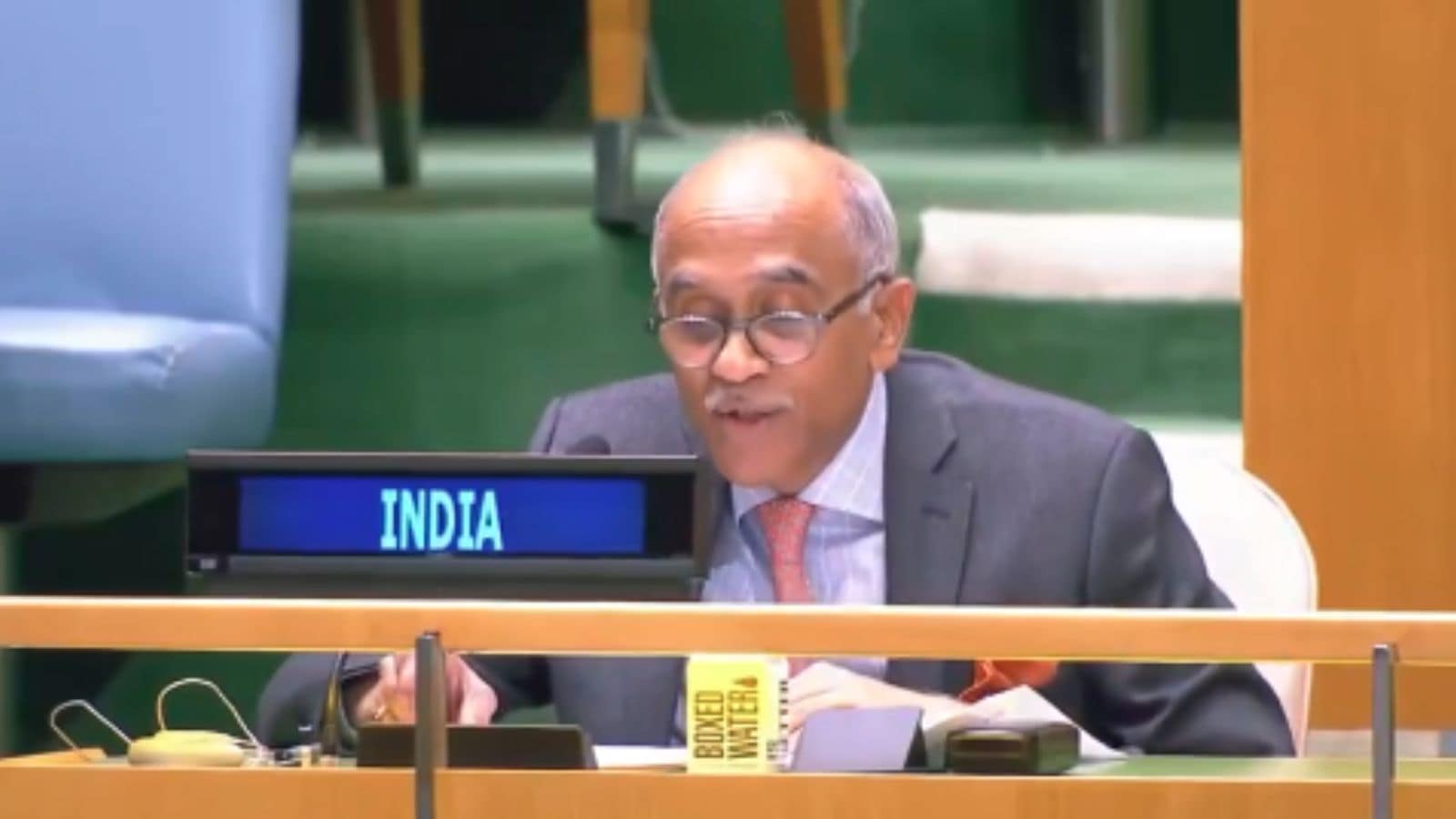
India’s Permanent Representative to the UN Ambassador Parvathaneni Harish, while addressing the UN General Assembly commemoration of the International Day to Combat Islamophobia on Monday (Mar 16), said, “India’s western neighbour is an excellent example of fabricating imaginative tales of Islamophobia in their neighbourhood,” without directly naming Pakistan.
“One wonders what would brutal repression of Ahmadiyyas in this country be termed, or the large-scale refoulement of the helpless Afghans or air-bombing campaigns in this Holy Month of Ramadan?” he said.
#WATCH | Permanent Representative of India to the United Nations, Parvathaneni Harish, says, “I stress that it is important for the UN to take note of the rising trend and dangers of weaponising religious identity and instrumentalising it to serve narrow political ends – by state… pic.twitter.com/lS2e7kFgL4
— ANI (@ANI) March 17, 2026
He further called on the UN to focus on the “rising trend and dangers of weaponising religious identity and instrumentalising it to serve narrow political ends” by both states and non-state actors, and underlined that India is home to over 200 million Muslims.
“Muslims in India, including those in Jammu and Kashmir, elect their own representatives to speak for them. The only “phobia” evident here appears to be directed against the multicultural and peaceful coexistence that all communities in India enjoy, including Muslim communities,” Harish said.
New Delhi also noted that the 1981 Declaration on the Elimination of All Forms of Intolerance and of Discrimination Based on Religion or Belief remains a significant and enduring instrument that glorifies the right of all religious followers without privileging any.
“The philosophy of ‘Sarva Dharma Sambhava’ implying equal respect for all religions has been the civilizational way of life for India and one that inspired the secular ethos of the Indian Constitution,” he said.
Harish urged the United Nations to channel its time and resources towards building inclusive societies “grounded in equality, dignity, and the rule of law – for every individual of every faith.”
The Express Global Desk at The Indian Express delivers authoritative, verified, and context-driven coverage of key international developments shaping global politics, policy, and migration trends. The desk focuses on stories with direct relevance for Indian and global audiences, combining breaking news with in-depth explainers and analysis.
A major focus area of the desk is US immigration and visa policy, including developments related to student visas, work permits, permanent residency pathways, executive actions, and court rulings. The Global Desk also closely tracks Canada’s immigration, visa, and study policies, covering changes to study permits, post-study work options, permanent residence programmes, and regulatory updates affecting migrants and international students.
All reporting from the Global Desk adheres to The Indian Express’ editorial standards, relying on official data, government notifications, court documents, and on-record sources. The desk prioritises clarity, accuracy, and accountability, ensuring readers can navigate complex global systems with confidence.
Core Team
The Express Global Desk is led by a team of experienced journalists and editors with deep expertise in international affairs and migration policy:
Aniruddha Dhar – Senior Assistant Editor with extensive experience in global affairs, international politics, and editorial leadership.
Nischai Vats – Deputy Copy Editor specialising in US politics, US visa and immigration policy, and policy-driven international coverage.
Mashkoora Khan – Sub-editor focusing on global developments, with a strong emphasis on Canada visa, immigration, and study-related policy coverage. ... Read More
Stay updated with the latest - Click here to follow us on Instagram
India’s Permanent Representative to the UN Ambassador Parvathaneni Harish, while addressing the UN General Assembly commemoration of the International Day to Combat Islamophobia on Monday (Mar 16), said, “India’s western neighbour is an excellent example of fabricating imaginative tales of Islamophobia in their neighbourhood,” without directly naming Pakistan.
“One wonders what would brutal repression of Ahmadiyyas in this country be termed, or the large-scale refoulement of the helpless Afghans or air-bombing campaigns in this Holy Month of Ramadan?” he said.
#WATCH | Permanent Representative of India to the United Nations, Parvathaneni Harish, says, “I stress that it is important for the UN to take note of the rising trend and dangers of weaponising religious identity and instrumentalising it to serve narrow political ends – by state… pic.twitter.com/lS2e7kFgL4
— ANI (@ANI) March 17, 2026
He further called on the UN to focus on the “rising trend and dangers of weaponising religious identity and instrumentalising it to serve narrow political ends” by both states and non-state actors, and underlined that India is home to over 200 million Muslims.
“Muslims in India, including those in Jammu and Kashmir, elect their own representatives to speak for them. The only “phobia” evident here appears to be directed against the multicultural and peaceful coexistence that all communities in India enjoy, including Muslim communities,” Harish said.
New Delhi also noted that the 1981 Declaration on the Elimination of All Forms of Intolerance and of Discrimination Based on Religion or Belief remains a significant and enduring instrument that glorifies the right of all religious followers without privileging any.
“The philosophy of ‘Sarva Dharma Sambhava’ implying equal respect for all religions has been the civilizational way of life for India and one that inspired the secular ethos of the Indian Constitution,” he said.
Harish urged the United Nations to channel its time and resources towards building inclusive societies “grounded in equality, dignity, and the rule of law – for every individual of every faith.”
The Express Global Desk at The Indian Express delivers authoritative, verified, and context-driven coverage of key international developments shaping global politics, policy, and migration trends. The desk focuses on stories with direct relevance for Indian and global audiences, combining breaking news with in-depth explainers and analysis.
A major focus area of the desk is US immigration and visa policy, including developments related to student visas, work permits, permanent residency pathways, executive actions, and court rulings. The Global Desk also closely tracks Canada’s immigration, visa, and study policies, covering changes to study permits, post-study work options, permanent residence programmes, and regulatory updates affecting migrants and international students.
All reporting from the Global Desk adheres to The Indian Express’ editorial standards, relying on official data, government notifications, court documents, and on-record sources. The desk prioritises clarity, accuracy, and accountability, ensuring readers can navigate complex global systems with confidence.
Core Team
The Express Global Desk is led by a team of experienced journalists and editors with deep expertise in international affairs and migration policy:
Aniruddha Dhar – Senior Assistant Editor with extensive experience in global affairs, international politics, and editorial leadership.
Nischai Vats – Deputy Copy Editor specialising in US politics, US visa and immigration policy, and policy-driven international coverage.
Mashkoora Khan – Sub-editor focusing on global developments, with a strong emphasis on Canada visa, immigration, and study-related policy coverage. ... Read More
Stay updated with the latest - Click here to follow us on Instagram
AI Description
India criticized Pakistan at the UNGA for its actions in Afghanistan and its treatment of religious minorities. The speech highlighted concerns over Pakistan's alleged Islamophobia and military actions.